



Oct 92026



Couches for Sale in Tampa: How to Choose the Best Couch for Your Living Room
Finding the right couch is one of the most important decisions you will make for your living room. A couch sets the tone for the entire space, and with so many couches for sale in Tampa to compare, it can feel overwhelming to know where to start. Whether you are furnishing a new home or replacing a worn-out sofa, this guide walks you through everything you need to consider: size, material, style, and durability. By the end, you will know exactly what to look for and where to find it.
Step 1: Measure Your Space Before You Shop for Couches
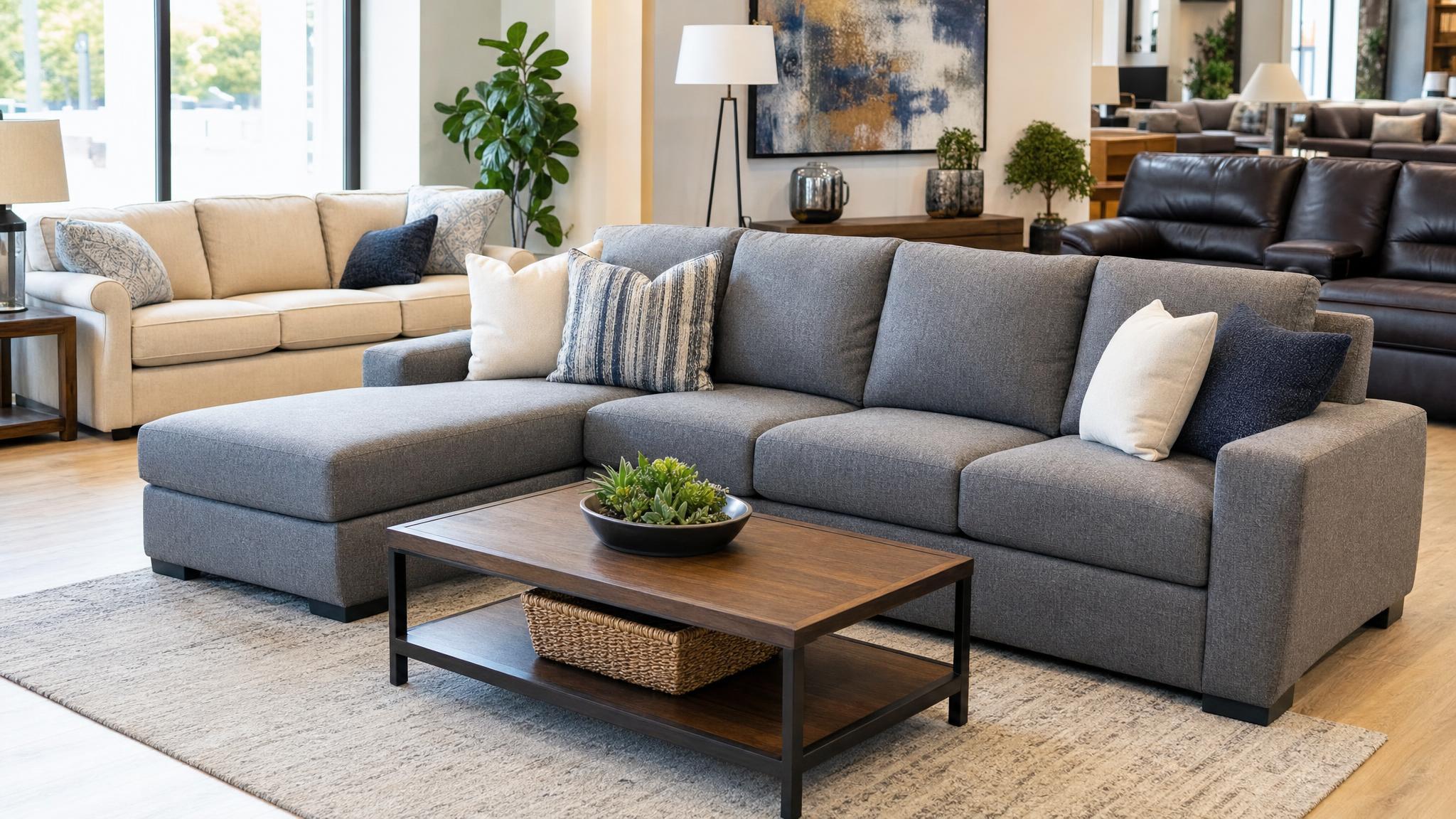
Before browsing couches for sale, grab a tape measure. Skipping this step is the number one mistake shoppers make and it leads to couches that are too large for the room or awkward to arrange. Here is what to measure:
- Room dimensions: Measure the full length and width of your living room.
- Doorways and hallways: Your couch has to fit through every entry point on the way in.
- Traffic lanes: Leave at least 36 inches of walking space around the couch.
- Wall clearance: Pull the couch at least a few inches from the wall so it does not look cramped.
As a rule of thumb, your couch should take up about two-thirds of the wall it sits against. A common mistake is buying a couch that is either too short (leaving awkward gaps) or too long (blocking windows and walkways). Writing down your measurements before you walk into a showroom saves you time and avoids a costly return.
How to Pick the Right Couch Material
Material is the single biggest factor in how long your couch lasts and how easy it is to keep clean. The most popular choices are fabric, leather, and microfiber, and each has real trade-offs. Shoppers browsing couches for sale in Tampa will find all three material types on the showroom floor, which makes it easier to compare how each actually looks and feels in person before committing.
Leather Couches for Sale in Tampa: Durability and Style
Leather couches for sale consistently rank among the most popular options for good reason. Genuine leather is exceptionally durable, easy to wipe clean, and develops a rich character over time that makes each piece look more distinctive with age. It holds up well in households with pets and kids because liquid does not soak in immediately the way it does with fabric.
The trade-offs: leather can feel warm in summer, and it costs more upfront than fabric alternatives. Bonded leather (a mix of leather scraps and synthetic backing) is a lower-cost option, but it peels and cracks within a few years. If you are going to invest in a leather couch, genuine or top-grain leather is the version worth having.
Fabric and Microfiber Sofas
High-quality woven fabric and microfiber couches offer more color and texture variety than leather, and they tend to feel softer right away. Performance fabrics with tight weaves resist staining and pet hair better than standard upholstery. Microfiber, in particular, cleans up easily with a damp cloth and holds its shape well over years of daily use.
The trade-off with fabric: it absorbs odors and moisture more readily than leather, so it needs more routine cleaning attention in active households.
Choosing a Style: Modern Couches vs. Traditional Designs
Once you know your measurements and have a material in mind, the next step is style. Modern couches and traditional sofas both have their place, and the right call depends on how the rest of your living room is furnished.
Modern Couches
Modern couches lean toward clean lines, low profiles, and minimal ornamentation. Legs are often tapered wood or metal, cushions are firm and geometric, and the overall silhouette is compact. They work especially well in open-plan spaces where a bulky traditional sofa would feel heavy. Sectionals in a modern style let you configure the layout to match your room rather than forcing your room to work around a fixed shape.
Traditional and Transitional Sofas
Traditional sofas feature rolled arms, deeper cushions, and heavier frames. They are built for comfort first and last for decades when made with a solid hardwood frame. Transitional designs split the difference: they have some of the clean lines of modern couches but the deeper seat depth and cushioning of a classic sofa. This makes them a reliable all-purpose choice for living rooms that mix styles.
What to Look for in Couch Construction and Durability
A couch that looks great in the showroom can start sagging within two years if the internal construction is poor. Here is what separates a couch worth buying from one worth skipping:
- Frame material: Look for kiln-dried hardwood. Softwood and particleboard frames warp and crack over time.
- Joints: Glued and doweled joints are better than stapled or screwed connections, which loosen under daily use.
- Seat cushion fill: High-density foam (1.8 lb density or higher) keeps its shape. Low-density foam compresses quickly and stays flat.
- Spring system: Eight-way hand-tied springs offer the best long-term support. Sinuous springs are adequate for a mid-range couch at a lower price point.
- Back cushion fill: Feather-down blend cushions feel luxurious but require daily fluffing. Foam-wrapped cushions hold their shape with less maintenance.
When you visit a showroom, press down on the cushion and then stand. If it takes several seconds to spring back, the foam density is likely too low. Lift one corner of the frame a few inches. A rigid frame with no flex indicates solid construction.
Sectional vs. Standard Sofa: Which Couches for Sale in Tampa Are Right for Your Room?
The choice between a sectional and a standard sofa comes down to room size, household size, and how you use the space.
A sectional sofa gives you more seating in a large or open-plan room, creates a natural anchor for a conversation area, and can double as a media room centerpiece. The downside is that sectionals are harder to rearrange and can overwhelm a smaller room.
A standard three-seat sofa paired with accent chairs offers more layout flexibility and works in a wider range of room sizes. If your living room is under 200 square feet, a sofa-plus-chairs combination is usually the smarter choice.
Before committing to a sectional from the couches for sale at any store, confirm the full assembled dimensions, including the chaise leg if one is attached, and trace the delivery path from the front door to the living room.
How to Care for Your Couch After You Buy It
Getting the right couch is only half of the equation. How you care for it determines whether it lasts five years or fifteen. Whether you found your couch among the couches for sale in Tampa at a local showroom or ordered it elsewhere, a few habits go a long way:
- Rotate and flip cushions: Flip seat cushions every one to two months to distribute wear evenly. Reversible cushions last noticeably longer than fixed ones.
- Vacuum regularly: Use an upholstery attachment to remove dust and debris from crevices before they work their way into the fabric or leather grain.
- Treat spills immediately: Blot, never rub, to keep stains from spreading. Water-based cleaners work for most fabric types; leather needs a conditioning treatment every six to twelve months.
- Keep it out of direct sunlight: UV exposure fades fabric and dries out leather over time. Position the couch away from windows or use curtains to filter strong afternoon light.
Following these steps protects your investment and keeps the couch looking the way it did the day you brought it home. The CPSC’s upholstered furniture guidelines provide a useful overview of flammability and safety standards to be aware of when evaluating any sofa. It is worth asking about care recommendations in person when you visit the showroom, since each material has its own specifics.
Frequently Asked Questions About Couches for Sale in Tampa
What size couch should I buy for a small living room?
For a small living room under 150 square feet, a loveseat or compact two-seat sofa (72 to 84 inches wide) is usually the right fit. Keep at least 18 inches between the sofa and a coffee table so the room does not feel blocked. Avoid sectionals in rooms this size since they will dominate the space and limit your layout options.
How long should a quality couch last?
A well-constructed couch with a hardwood frame, high-density foam cushions, and quality upholstery should last 10 to 15 years with normal household use. Budget couches with particleboard frames and low-density foam typically need replacing within three to five years. Investing in solid construction upfront costs less over time than replacing a cheap sofa every few years.
Are leather couches for sale in Tampa worth the extra cost?
Genuine leather couches for sale are worth the investment for most households. Leather cleans up faster than fabric, resists pet hair, and improves in appearance over time with proper conditioning. It does cost more upfront, but a well-maintained leather sofa outlasts most fabric alternatives by several years.
What is the difference between modern couches and traditional sofas?
Modern couches prioritize clean lines, low profiles, and minimalist design. Traditional sofas feature deeper cushions, rolled arms, and more ornate detailing. Transitional designs blend both styles and work in rooms that mix contemporary and classic elements. The best choice depends on your existing furniture and the overall tone you want for the room.
See Couches for Sale in Tampa at Furniture Distribution Center
Reading about couches is one thing. Sitting on them is how you actually decide. Furniture Distribution Center carries a wide selection of living room sets and sofas at showrooms in Tampa, Lakeland, and Gainesville, so you can compare styles, materials, and sizes in person before committing.
Our Tampa showroom at 5011 W Hillsborough Ave is open Monday through Friday 11 AM to 7 PM, Saturday 10 AM to 7 PM, and Sunday 11 AM to 5 PM. You can also visit us at our Lakeland location or our Gainesville showroom inside The Oaks Mall. Call us at (813) 444-9713 with questions or to find out what is currently in stock.
Oct 92026
Mattress Store Tampa: A Buying Guide to Finding the Perfect Mattress
Mattress Store Tampa: A Buying Guide to Finding the Perfect Mattress
Choosing a mattress is one of the most important furniture decisions you will make, and if you are searching for a mattress store Tampa shoppers can visit in person, this is a good place to start. The right mattress affects how you sleep, how you feel in the morning, and how well your body recovers overnight. With so many mattress types, firmness levels, and materials on the market, it is easy to feel overwhelmed before you ever lie down on a single option. This guide walks you through the key questions to ask, the differences between popular mattress types, and what to look for when comparing options at a furniture showroom in Tampa.
Why Shoppers Choose a Mattress Store Tampa Location to Buy
Adults spend roughly a third of their lives sleeping. A mattress that does not match your body type, sleep position, or comfort preference can lead to restless nights, back pain, and fatigue that follows you through the day. The good news is that once you understand a few basics, narrowing down your choices becomes much more straightforward.
A few things are worth knowing upfront. No single mattress works for everyone. What suits a side sleeper with shoulder pain may be exactly wrong for a stomach sleeper with lower back issues. And material quality matters more than brand name or price tag when it comes to long-term durability. The Sleep Foundation’s mattress buying guidance confirms that comfort, support, and durability are the three factors most consistently tied to long-term satisfaction with a mattress purchase.
Common Mattress Types and What They Feel Like
Understanding the main mattress types is the first step toward finding the right fit. Each one has a distinct feel and performance profile.
Innerspring Mattresses
Innerspring mattresses use a steel coil support system. They tend to feel bouncy and responsive, which many people who prefer a traditional mattress experience appreciate. They also sleep cooler than foam options because air circulates through the coil system. The trade-off is that lower-coil-count models can transfer motion easily, which matters if you share the bed.
Memory Foam Mattresses
Memory foam contours closely to your body, distributing weight evenly and reducing pressure on hips, shoulders, and joints. This makes it a popular choice for side sleepers and for anyone dealing with pressure point discomfort. Traditional memory foam can retain heat, though many newer versions use open-cell or gel-infused foam to address this.
Pillowtop Mattresses
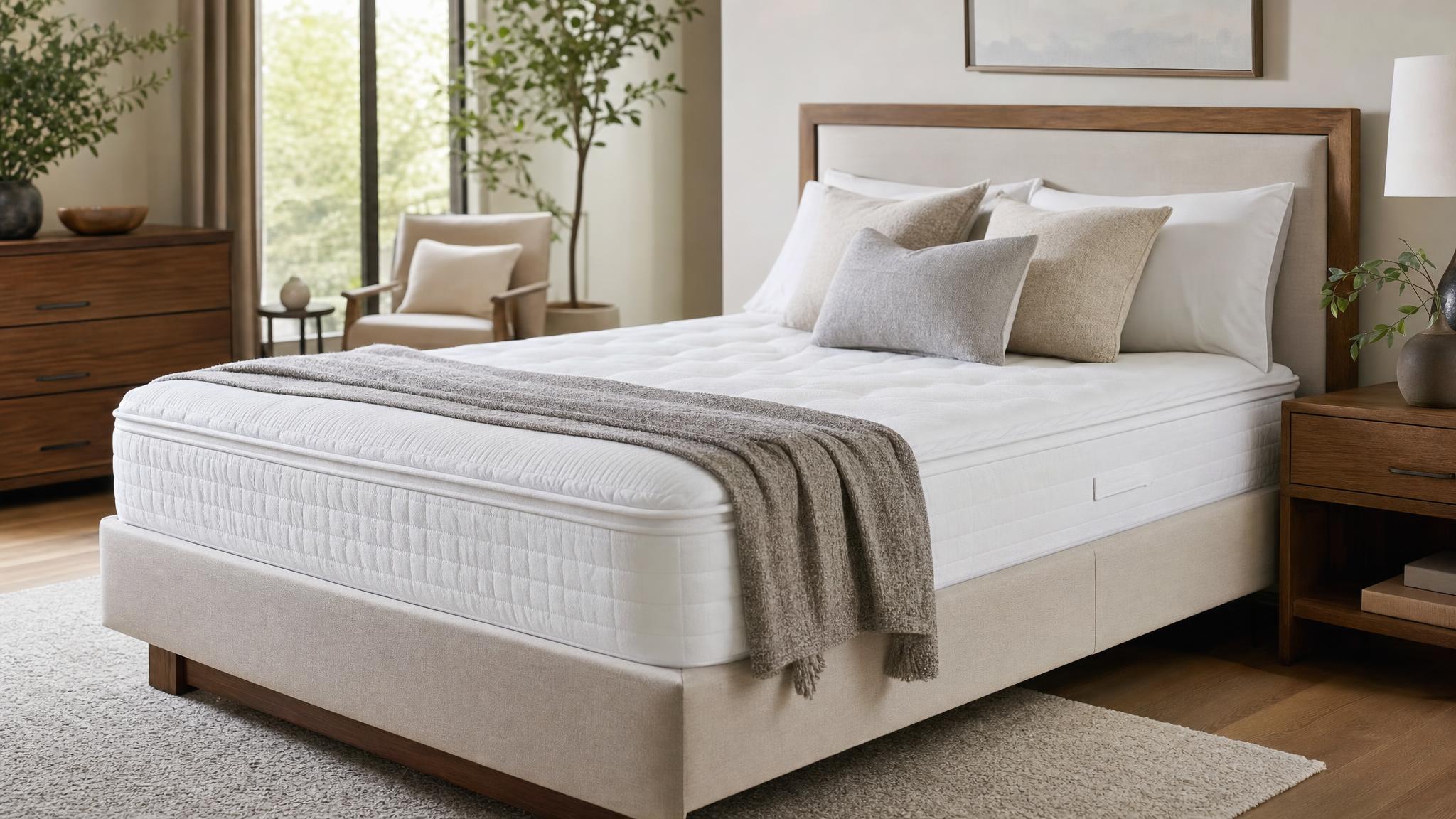
A pillowtop mattress adds a sewn-on cushion layer to the top of either an innerspring or foam base. The result is a plush, cradling feel right from the surface. Pillowtop options are a good choice for people who want immediate comfort without the full-body contouring of memory foam. They are among the most popular mattress types shoppers look at when browsing a mattress for sale at a local showroom.
Hybrid Mattresses
Hybrid mattresses combine a coil support core with foam or latex comfort layers on top. The goal is to get the responsiveness and breathability of innerspring with the pressure relief of foam. Hybrids work well for couples with different sleep preferences because they balance support and cushion without leaning too far in either direction.
How to Choose a Mattress Based on Sleep Position
Your sleep position is one of the clearest signals for which mattress will work best for you. Here is a straightforward breakdown.
- Side sleepers need enough cushion at the shoulder and hip to keep the spine aligned. A medium to medium-soft firmness in memory foam or a pillowtop tends to work well.
- Back sleepers generally do best on a medium-firm mattress that supports the lumbar curve without letting the hips sink too far.
- Stomach sleepers need a firmer surface to prevent the hips from dropping and straining the lower back. A firm innerspring or firm hybrid is usually the right choice.
- Combination sleepers who move between positions benefit from a responsive surface that adjusts quickly, which makes innerspring or hybrid options a natural fit.
Firmness Scale: What the Numbers Mean
Most mattresses are rated on a scale from 1 (very soft) to 10 (extremely firm), with most buyers falling somewhere between 4 and 7. Here is how to read those numbers in practice:
- Soft (1-3): Deep contouring, suited for lightweight side sleepers
- Medium-soft (4): Good cushion with some support, popular for side sleepers
- Medium (5): The most common choice, works for a wide range of sleepers
- Medium-firm (6-7): Balanced support, works well for back and combination sleepers
- Firm (8-10): Minimal give, suited for stomach sleepers and those who prefer less contouring
The best way to gauge firmness is to lie on a mattress in your normal sleep position for a few minutes, not just sit on the edge. Showrooms at any mattress store Tampa shoppers visit, including Furniture Distribution Center locations in Tampa, Lakeland, and Gainesville, give you the space to do exactly that before you decide.
Mattress Materials and What to Look for in Durability
A mattress is a long-term investment, and the materials inside determine how long it holds up. A few markers of quality are worth checking when you walk into any mattress store Tampa area shoppers rely on.
Coil count and gauge (innerspring): Higher coil counts and lower gauge numbers (thicker coils) typically indicate better support and durability. Look for coil counts of at least 400 in a queen size as a reasonable baseline.
Foam density: In memory foam mattresses, higher density foam holds its shape longer. A foam density of 4 to 5 pounds per cubic foot is considered quality construction for the comfort layer.
Edge support: A mattress with reinforced edges holds its shape across the full sleeping surface, which matters for couples who use every inch of the bed and for anyone who sits on the edge regularly.
Cover material: Breathable covers, especially those with natural fibers, help regulate temperature overnight. This matters more than it might seem for people who tend to sleep warm.
Tips for Getting the Most Out of Your Mattress Store Tampa Visit
Walking into a mattress store Tampa shoppers rely on without a plan can make the experience feel overwhelming. A few simple habits before and during your visit will help you use the time well and walk out with a clearer decision.
Bring your own pillow if you have a specific one you sleep with regularly. The feel of a mattress changes significantly depending on how your head is supported, and using a familiar pillow makes the test more accurate. Wear comfortable clothes that let you lie down naturally, and plan to spend at least five to ten minutes on each mattress you are seriously considering, not just a quick sit and bounce.
Come in knowing your sleep position and your approximate weight range. Both of these affect how a given firmness level will actually feel on your body, and a staff member at the Tampa showroom can use that information to point you toward options that match your needs rather than guessing from appearance alone. If you share the bed, bring your partner so both of you can test options together, since what works for one person may not work for both.
Mattress Size Guide: Matching the Mattress to Your Space
Size affects both comfort and how the mattress fits the room. Here is a quick reference for choosing the right dimensions.
- Twin / Twin XL: Single sleepers, children’s rooms, compact spaces
- Full: Single adult sleepers who want more room, or smaller bedrooms
- Queen: The most popular size, suits couples and single sleepers who prefer space
- King / California King: Couples who want maximum room; California King is longer and narrower, suited for taller individuals
When choosing a size, measure your bedroom first. Leave at least two feet of clearance on each side of the bed and at the foot to keep the room feeling open. If you are also shopping for a bedroom set, confirm that the bed frame and the mattress size match before you buy both.
Frequently Asked Questions for Mattress Store Tampa Shoppers
How long should a good mattress last?
A well-made mattress typically lasts 7 to 10 years with normal use. Memory foam and latex options often hold up toward the longer end of that range, while lower-density foam models may show wear sooner. The clearest sign that a mattress has reached the end of its life is visible sagging or a noticeable loss of support that leaves you waking up stiff.
What firmness level is best for back pain?
A medium-firm mattress is the option most commonly recommended for back pain because it supports the natural curve of the spine without creating pressure points at the hips and shoulders. The ideal firmness also depends on body weight and sleep position: lighter-weight sleepers often need slightly softer options, while heavier sleepers typically need firmer support to prevent the hips from sinking too far into the mattress.
Is memory foam or innerspring better for hot sleepers?
Innerspring mattresses sleep cooler because the open coil structure allows airflow throughout the mattress. Traditional memory foam retains heat, though gel-infused and open-cell foam versions have improved significantly. Hybrids with a coil base and a thin foam comfort layer offer a middle ground that many hot sleepers find works well for both comfort and temperature regulation.
How do I choose between mattress types like pillowtop and firm?
A pillowtop mattress is the right choice when you want a plush, cushioned feel from the moment you lie down, and your body type and sleep position support a softer surface, typically side sleepers and lighter-weight individuals. A firm mattress is better suited for stomach sleepers, back sleepers who need strong lumbar support, and heavier-weight individuals who need the mattress to resist sinking. If you are unsure, the best approach is to test both mattress types in a showroom and pay attention to how your lower back feels after lying in your normal sleep position for several minutes.
Can I visit a mattress store Tampa showroom before buying?
Yes. Furniture Distribution Center carries a selection of mattress types at its showrooms in Tampa, Lakeland, and Gainesville. You can lie on different options, compare firmness levels, and talk through the differences with the team on the floor before you decide. Call the Tampa showroom at (813) 444-9713 to confirm current inventory and showroom hours before your visit.
Visit a Mattress Store Tampa Showroom at Furniture Distribution Center
Shopping online gives you information. Lying on a mattress in person gives you an answer. Furniture Distribution Center has showrooms in Tampa at 5011 W Hillsborough Ave, Lakeland at 4525 S Florida Ave, and Gainesville inside The Oaks Mall at 6455 W Newberry Rd. Each location carries a range of mattress types at different firmness levels so you can compare options side by side and find the one that fits how you sleep.
Call the Tampa location at (813) 444-9713 or stop in during showroom hours to speak with someone who can help you find the right mattress for your needs. You can also reach out through the contact page if you have questions before you visit.
Oct 92026

Dining Room Sets Tampa: How to Design the Perfect Dining Space
Choosing the right dining room sets Tampa homeowners can browse in person transforms one of the most-used spaces in your home. Whether you are outfitting a formal dining room, an open-plan kitchen area, or a cozy breakfast nook, the decisions you make about size, seating style, materials, and layout will shape how comfortable and functional that space actually feels. This guide walks through the key considerations so you can shop with confidence.
How to Size Dining Room Sets for Your Space

Before you fall in love with a table, measure your room. A common mistake is choosing a table that looks right on the showroom floor but leaves no room to pull chairs back at home. The general rule: allow at least 36 inches between the table edge and the wall or any other furniture. That gives seated guests room to push back and stand without bumping into anything.
For a room that is roughly 10 by 12 feet, a 36-by-60-inch rectangular table seats four to six people comfortably. Step up to a 12-by-14-foot room and a 6 chair dining table in the 36-by-72-inch range fits well. Round tables work beautifully in square rooms and tend to make conversation easier, but they do not seat as many people per square foot as a rectangular option.
If you frequently host larger gatherings, look for tables with extension leaves. A table that seats six every day and expands to seat ten for holidays is one of the most practical investments in dining room furniture you can make.
Chairs vs. Benches: Which Seating Style Works Best?
The most-searched question in this category is about mixing benches with chairs, and for good reason. A bench along one or two sides of a dining table and chairs solves a real problem: benches slide closer to the table than chairs do, so you can squeeze in extra guests when you need to. They are also a natural fit for families with young children who prefer to sit together.
The trade-off is lumbar support. A long meal is more comfortable in an upholstered chair than on a bench, especially for older guests. A popular compromise is a dining table and chairs configuration with two armchairs at the heads of the table, side chairs along the long sides, and a bench tucked in when the crowd grows.
Armchairs versus side chairs is another choice worth thinking through. Armchairs take up more horizontal space (typically 24 to 28 inches wide versus 18 to 20 inches for a side chair), so a table that fits six side chairs may only fit four armchairs. Count the inches before you buy.
Dining Room Furniture Materials: What Holds Up and What to Expect
Solid wood dining tables are the most durable option and develop character over time. Oak, maple, and acacia are common choices that handle daily use well. Solid wood does expand and contract slightly with humidity changes, which is normal and not a defect.
Wood veneer tables offer the look of solid wood at a lower price point, with a more stable surface that is less prone to movement. The edge banding and veneer quality vary significantly between manufacturers, so it is worth inspecting the piece in person rather than relying on a photo.
Glass-top tables are easy to wipe down and visually lightweight, which helps in smaller rooms. The surface shows fingerprints readily and is not ideal in homes with young children. Metal-and-glass combinations tend to read as modern or industrial and pair best with upholstered chairs that soften the overall look.
For chair upholstery, performance fabrics and faux leather clean up far more easily than natural linen or velvet. If the dining room sees heavy daily use, prioritize cleanability over texture.
Matching Style: How to Pull a Dining Space Together
Dining room sets do not have to match perfectly, but they do have to coordinate. The most reliable approach is to anchor the room with one dominant material or finish (a warm walnut table, for example) and repeat that tone in smaller pieces like a buffet, lighting, or chair legs. Chairs in a contrasting color or material add visual interest without creating chaos.
Scale matters as much as style. A heavy, farmhouse-style table overwhelms a small room even if the individual pieces are beautiful. A delicate pedestal table looks lost in a large open-plan space. When in doubt, match the visual weight of the furniture to the scale of the room.
If you are working with an open floor plan where the dining area flows directly into the living room, choose dining room furniture that shares at least one material or color with the living room pieces. It does not need to match, but it should feel like the same home.
What to Look for When Shopping Dining Room Sets in Tampa Bay
Seeing furniture in person makes a real difference. Photos do not convey how a finish actually looks in natural light, how firm a seat cushion is, or how solid the joinery feels. If you are shopping for dining room sets in the Tampa Bay area, visiting a showroom lets you sit in the chairs, open any extension leaves, and compare materials side by side before you commit.
A few practical things to check in the showroom: pull a chair all the way out and push it back in to test the floor clearance. Sit in each chair style for a moment. If a table has leaves, ask to see them installed. Check that the leaf finish matches the main table surface closely enough that it will not look mismatched in use.
For guidance on coordinating your dining room furniture with the rest of your home, the team at Furniture Distribution Center is available in person at showrooms in Tampa, Lakeland, and Gainesville. You can also call (813) 444-9713 to ask questions before making the drive.
Frequently Asked Questions About Dining Room Sets
What size dining room set do I need for a family of four?
A four-person household does well with a table in the 36-by-48-inch to 36-by-60-inch range. This gives each person comfortable elbow room while fitting in most standard dining rooms. If you host guests regularly, choose the longer end of that range or look for a table with an extension leaf so you can seat six when needed.
Is a 6 chair dining table right for my room?
A 6 chair dining table typically requires a rectangular table at least 60 to 72 inches long and a room that is at least 10 by 12 feet to allow adequate clearance around all sides. Measure your space with the 36-inch clearance rule in mind before purchasing. In a room that falls slightly short, a bench on one side can help because it slides closer to the table than individual chairs do.
What is the most durable material for a dining table with kids?
Solid hardwoods like oak and maple hold up well to daily use and can be refinished if scratched over time. For the tabletop surface, a matte or satin finish hides minor scuffs better than a high-gloss one. Avoid glass tops in high-use family settings. For chairs, choose a performance fabric or faux leather that cleans with a damp cloth rather than natural textiles that absorb spills.
Can I mix chairs from different dining room sets?
Yes, and it often looks intentional rather than mismatched if you follow a few guidelines. Keep the seat height consistent across all chairs (standard dining chair seat height is 17 to 19 inches). Coordinate at least one element, such as leg finish or upholstery color. Using two distinct chair styles, one at the head and one on the sides, is a classic approach that works in most dining spaces.
Ready to See Dining Room Furniture in Person?
Furniture Distribution Center carries a wide selection of dining room furniture across showrooms in Tampa, Lakeland, and Gainesville. Stop in to see current inventory, sit in the chairs, and get help choosing a set that fits your space and style. Call (813) 444-9713 to reach the Tampa showroom directly.
Mar 182015


Furniture Distribution Center Launches New Website!
Furniture Distribution Center is very excited to offer the public a brand new user-friendly website. Our new website now offers simple navigation menus, a wishlist, easy to contact forms, as well as our NEW BLOG!
Furthermore, we are also offering a “SEARCH FOR PRODUCTS” tool so you may find that particular bedroom or living room brand on your mind.
Thank you for visiting FurnitureDistributionCenter.com for your wholesale furniture needs.
Popular Posts
Oct
09

Oct
09